Built Environment Design
This work traces a through line. From undergraduate studios in Louisiana where I was trying to understand how vibrancy lives in a space, to graduate research on trauma and health and what buildings do to bodies, to doctoral work on queer and trans belonging and what it means to feel held by a place. The thread was always the same question: who is this space for, and do they know it?
Some of what's here is built. Some is conceptual — ideas that came out of research and haven't found walls yet. Both matter.
Historic Preservation · Sense of Place Visit School ↗
Trauma · Positive Distraction · Wellbeing Visit School ↗
Queer & Trans Belonging · Community Space Visit School ↗
Sense of Place, Vibrancy & the Body in Space
My undergraduate years in Lafayette were about learning to see. The city itself was a teacher — a place with deep Cajun and Creole roots, a Front Porch culture baked into the sidewalks, and a stubborn insistence on community that no amount of highway development had fully managed to erase.
The work in this portfolio traces that wrestling. Historic preservation projects. Explorations of adaptive reuse. Attempts to render people as the point of a space rather than an afterthought in it. And a growing sense that the real design problem was always social before it was spatial.
I graduated with the Design Excellence Award in 2015. What I carried forward was less the award than the question it represented: what does it mean for a space to feel alive?
Fitzgerald Station
This project sits at the hinge point. I was finishing my undergraduate degree and beginning to ask the questions that would eventually push me toward graduate school — questions about historic structures that communities had been excluded from, about whose memory gets preserved, and what obligation a designer has to that history.
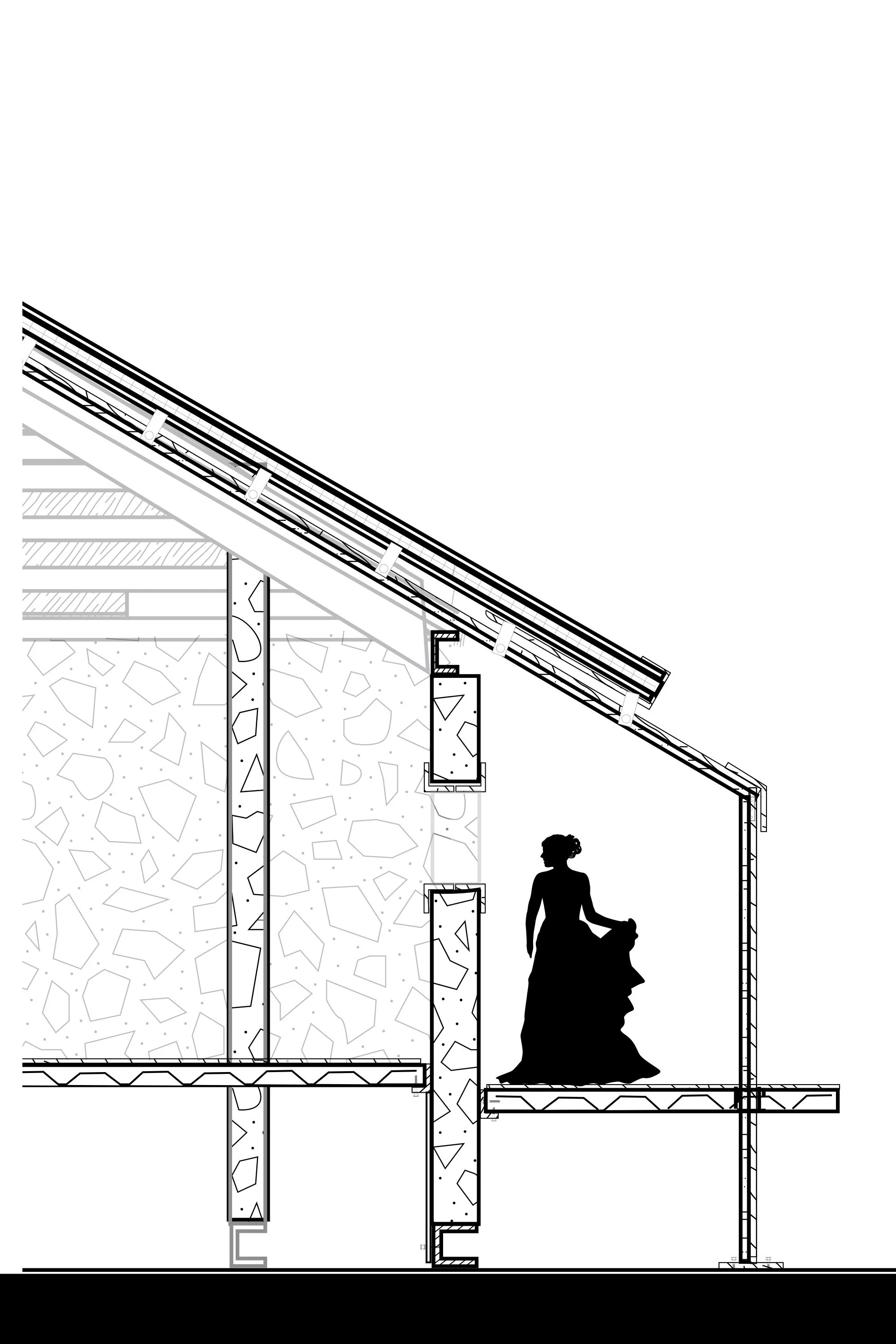
The research paper that came out of this project was some of my first serious academic writing on place and belonging. You can read the full paper below. The presentation boards document the spatial analysis and design proposals. Together they show the argument taking shape: that built environment work is always also social work.
Read the Paper ↗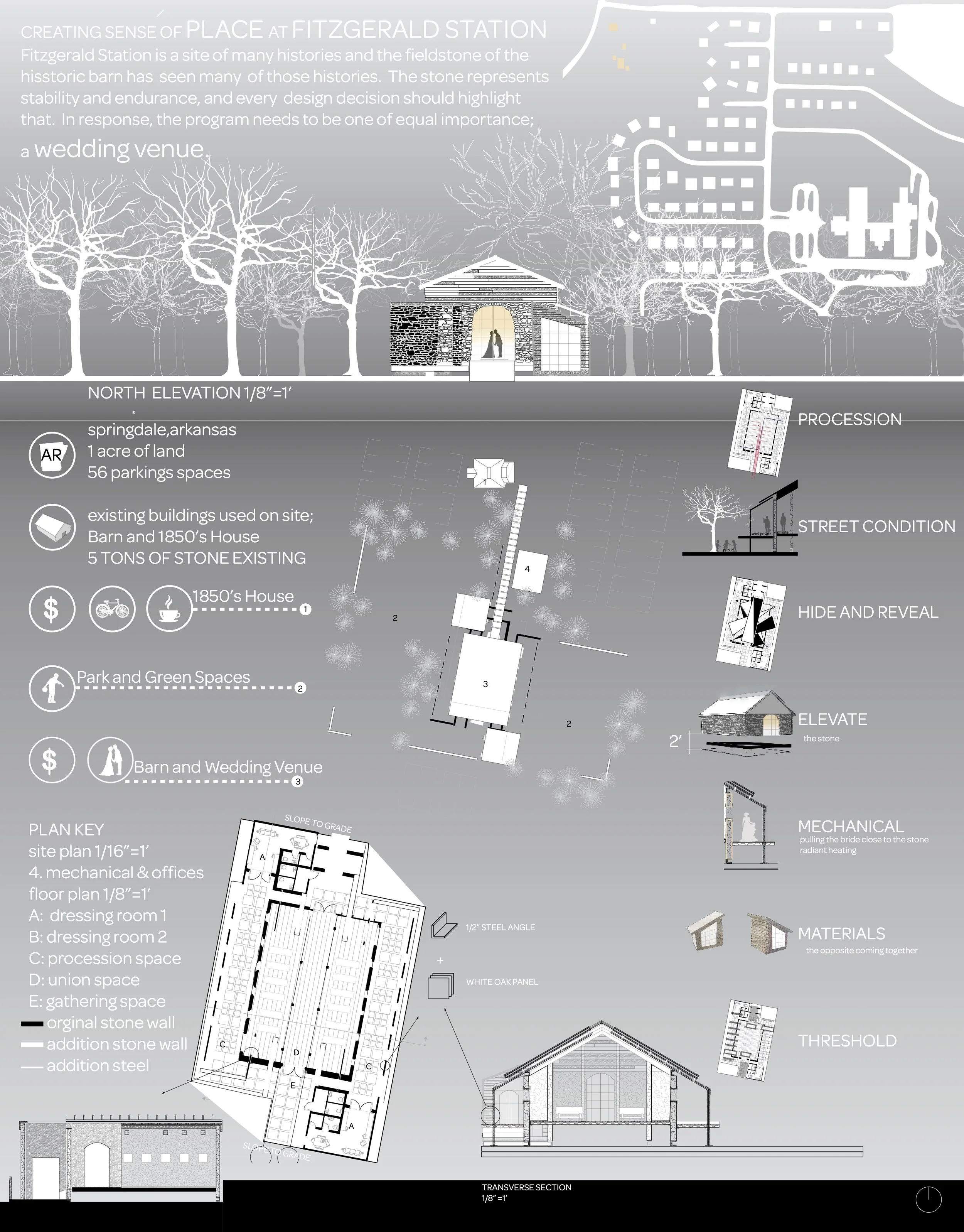
Trauma, Health & Positive Distraction
The thesis started with a simple observation: healthcare environments make people feel worse than they need to. The clinical stripped away everything that helps — texture, memory, natural light, the small signals that tell a body it is somewhere safe and familiar.
Sense of place was the mechanism. A waiting room that feels like somewhere, rather than nowhere, is not just aesthetically nicer. It does measurable therapeutic work. That argument became the publication that came out of this program in 2020.
This thesis won the Edwin T. Steffian Centennial Award for Master's Thesis Excellence from Boston Architectural College.
Senior Living Re-imagined Through Sense of Place
The lighting research presented at NeoCon and NewBridge grew out of a larger speculative project: what would a senior living facility look like if it were designed around what the next generation of residents actually values? Familiar light. Meaningful objects. A room that remembers something about who you were, not just who you are now.
This remains an unbuilt proposal, but the framework has shaped every community space project since.
One of the studios I taught and researched through at BAC took "The Body Keeps the Score" as its organizing text. The question was deceptively direct: if trauma is stored in the body, what does a building that understands that actually look like?
This studio work became the foundation for the Trauma-Informed Design certification I'm completing through TiD Society in May 2026 — and for the way I approach every community space project now.
Spatial Protocols for Trauma-Informed Environments
A set of design guidelines developed through studio research and literature review. Covers threshold design, sensory load management, wayfinding legibility, material selection, and the ethics of surprise in public space.
Informed by: van der Kolk's somatic trauma theory, Pallasmaa's phenomenology of the senses, and the emerging TiD framework from the Trauma-Informed Design Society.
Trauma-Informed Design Certification
Completing the TiD Society credentialing program — a practitioner-level certification in trauma-informed design principles for the built environment. The culmination of work that started in this studio and has threaded through every project since.
The Full Body of Work
The thesis and the studio research don't fully capture what two years at BAC produced. This portfolio is the complete picture — the projects, the process, the ideas that didn't make it into the final paper, and the visual language I was developing. If the undergraduate portfolio shows the questions forming, this one shows the first real answers.
Belonging, Queer Space & the Architecture of Being Seen
The dissertation asks what queer bookstores do for transgender people that other spaces don't. Not just symbolically — physically. What is it about the arrangement of a room, the way light falls on a shelf, the smell of old paper and new ink, the sound of a door that doesn't lock, that makes a trans person feel like they can exhale?
The research draws on phenomenological interviews with trans community members, spatial analysis of queer bookstores across Seattle, and frameworks from Black feminist geography, care ethics, and queer theory. It was presented at the University of Washington School of Public Health's Qualitative Works in Progress series in Spring 2025.
Research Frameworks
Black feminist geography (McKittrick, Shabazz) · Care ethics (Tronto, Noddings) · Queer phenomenology (Ahmed) · Abolition geography (Gilmore) · Somatic belonging theory
A Design Framework for Trans-Affirming Community Spaces
Drawing from dissertation findings: a set of spatial design principles for community organizations, libraries, and cultural spaces that want to move beyond rainbow flags and toward genuine structural welcome. Covers entry sequence design, acoustic privacy, spatial flexibility, material warmth, and visibility/legibility tradeoffs.
Available for speaking engagements, workshops, and organizational consultation.
Board member since 2023 for the QueerCrip Research Collective at UW — an interdisciplinary group working at the intersection of queer theory, disability studies, and spatial justice. The collective holds that the built environment is not neutral, and that making it more just requires research methods that center the people most harmed by how things are built now.
My role spans grant writing, organizational development, and connecting the collective's research to applied design practice. The academic work and the consulting work feed each other here more than anywhere else.
Radical Community Spaces: A Design Inquiry
What would a community center look like if it were designed by and for BIPOC and queer people, from the first site analysis through the final hardware selection? This speculative project maps the full design process through an antiracist, anti-ableist, queer-affirming lens.
Covers: site selection ethics, community co-design methodologies, spatial power dynamics, maintenance as justice, and what "radical care" looks like as a building program.
The research is applied. The application is research.
If you're building something and you want it to actually work for the people who will use it — especially the ones who have learned not to expect spaces to work for them — let's talk.